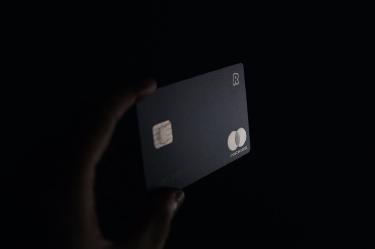
Passkeys Replace Passwords: Biometric Card Login Arrives

The End of Passwords Is Actually Here
Passwords have been the digital world’s security blanket for decades. Now they’re becoming obsolete. Major financial institutions are rolling out passkey technology that replaces typed credentials with biometric verification built directly into payment cards.
Mastercard launched its biometric card program in 2023, with JPMorgan Chase deploying 500,000 cards to commercial clients by mid-2024. Visa followed with its own biometric specifications in early 2024. The shift isn’t theoretical anymore-it’s happening in wallets right now.
The technology works through fingerprint sensors embedded in the card surface. Touch the sensor, and cryptographic keys verify your identity without transmitting biometric data. No passwords to remember - no PINs to enter. The card itself becomes the authentication factor.
How Biometric Card Authentication Actually Works
Traditional card security relies on something you have (the card) and something you know (PIN or password). Biometric cards add something you are-your fingerprint-while eliminating the knowledge component entirely.
The process happens in milliseconds. When you place your finger on the sensor, the card’s embedded chip compares it against the stored template. Match confirmed? The card generates a one-time cryptographic signature that authorizes the transaction. One fingerprint never leaves the card. Payment networks never see it - merchants never access it.
This matters because passwords are fundamentally broken. A 2023 Verizon Data Breach Investigations Report found that 86% of breaches involved stolen credentials. You can’t phish a fingerprint - you can’t brute-force biometric data. The attack surface shrinks dramatically.
The cards use Precise Biometrics’ algorithm technology, achieving false acceptance rates below 0. 001% while maintaining false rejection rates under 3%. That’s more reliable than many smartphone fingerprint readers, despite the smaller sensor size.
Passkeys vs. Traditional Authentication
Passkeys represent a broader shift beyond just card payments. The FIDO Alliance’s passkey standard-adopted by Apple, Google, and Microsoft-extends the same cryptographic principles to web and app authentication.
Traditional passwords fail on multiple fronts. Users reuse them across sites (59% according to a 2024 Google survey). They choose weak ones - they fall for phishing. Security questions don’t help-your mother’s maiden name is probably on Facebook.
Passkeys eliminate these vulnerabilities through public-key cryptography. Your device stores a private key. Websites get a public key. Authentication requires proving you control the private key, typically through biometrics or device PIN. No shared secrets means nothing to steal in a database breach.
The card use takes this further. Your smartphone can lose battery or get stolen. A biometric card works offline, requires no charging, and binds authentication directly to the physical payment instrument.
Banks are pushing adoption because fraud costs them $28. 65 billion annually (Nilson Report, 2023). Card-not-present fraud alone accounts for 73% of that. Passkeys can’t stop all fraud, but they eliminate entire attack categories.
Real-World Deployment and Adoption Barriers
JPMorgan’s deployment to commercial clients makes sense-business cards have higher credit limits and fraud exposure. But consumer rollout faces challenges.
Cost remains significant. Biometric cards run $15-25 per unit versus under $2 for standard EMV cards. Banks must justify that premium. NatWest tested biometric cards in 2022 but hasn’t announced mass deployment. U - s. Bank ran pilots in 2021. Progress is slower than the technology hype suggests.
Merchant acceptance is seamless-biometric cards work with existing contactless terminals. The authentication happens on the card, so payment networks see normal transactions. No infrastructure upgrades required. That’s a major advantage over technologies requiring new point-of-sale hardware.
User behavior presents another hurdle. Consumers have learned to protect PINs. Now they need to trust that fingerprints stored on cards can’t be extracted or spoofed. The technology is sound, but explaining it requires overcoming decades of password-based mental models.
Regulatory frameworks complicate deployment. The EU’s PSD2 directive mandates strong customer authentication, which biometric cards satisfy. But data protection regulations like GDPR require careful handling of biometric information-even when it never leaves the card. Legal teams move slower than engineers.
What This Means for Financial Security
The transition to biometric authentication is more than about convenience. It fundamentally changes the economics of fraud.
Account takeover fraud currently succeeds because attackers can scale credential stuffing attacks. Steal a database of passwords, try them everywhere, profit. Biometric authentication breaks that model. Attackers would need physical card possession plus biometric spoofing. That doesn’t scale.
Card-present fraud drops significantly. Stolen cards become useless without the cardholder’s fingerprint. Lost card liability-currently capped at $50 in the U. S - -essentially disappears. Banks save money - consumers avoid hassle.
But new attack vectors emerge. Sophisticated criminals may attempt to lift fingerprints and create fake biometric overlays. It’s theoretically possible though practically difficult. The arms race continues at a different level.
The broader implication is credential-less authentication becoming the default. Microsoft reported in 2024 that 400 million users authenticate with passkeys monthly. Apple added passkey support to iCloud Keychain in 2023. Google followed immediately. When tech giants align on standards, adoption accelerates.
Financial institutions must decide whether to lead or follow. Early adopters gain competitive advantage and customer trust. Laggards risk appearing outdated as younger consumers expect biometric authentication everywhere.
use Timeline and Future Outlook
Industry analysts project 30% of payment cards will include biometric authentication by 2028 (Goode Intelligence, 2024). That’s aggressive given current adoption rates, but possible if costs decline.
Smart card manufacturers are scaling production. Fingerprint Cards AB reported 320% revenue growth in its payment division for 2023. IDEX Biometrics signed partnerships with multiple card manufacturers. Supply chains are maturing.
The next evolution combines biometric cards with digital wallets. Tap your biometric card to a phone, and it authorizes mobile payments without separate authentication. One biometric verification unlocks multiple channels. Mastercard demonstrated this capability in 2024 but hasn’t announced commercial deployment.
Longer term, cards may incorporate multiple biometric factors. Fingerprint plus behavioral analysis of how you hold the card. Continuous authentication rather than point-in-time verification. The technology exists; use depends on cost and user acceptance.
Passwords won’t disappear overnight - legacy systems will persist. But the direction is clear. Authentication is moving from knowledge-based to possession-plus-biometric. Cards are just one battleground in a larger war against credential theft.
For consumers, the shift means less to remember and fewer fraud headaches. For criminals, it means stolen databases lose value. For financial institutions, it means substantial infrastructure investment with long-term fraud reduction payoff.
The passwordless future isn’t coming - it’s here. The question now is how quickly banks can replace billions of cards with biometric versions-and whether consumers will trust the technology enough to skip the password field.